by Diane Kue
When I was an elementary classroom teacher, I was often told that my students needed to read in every subject because “there is reading in every content area.” I could see how reading research could have a place in instruction when my students navigated scientific practices, but what about when the class period was looking at data instead of reading an article? Furthermore, the “there is reading in every content area” statement was especially hard to wrap my head around in my math class. Why did I have to give literacy so much clout in my instruction when my objective was teaching equivalent fractions?
Then, I shifted my thinking: What is literacy, exactly? I read a blog post from the National Council of Teachers of English that defined literacy as “the ability to read and write” (Peterson, 2020). However, this same post questioned the boundaries of this statement by asking how to measure technological proficiency, numeracy, and the values of those who are illiterate. This post transformed my approach to literacy, and I encourage all to read it here, as I will only be addressing numeracy.
For this blog post, I will focus on a type of literacy we are all exposed to several times a day. It is called quantitative literacy, or the ability to interpret numerical information. We apply quantitative literacy when solving everyday problems, such as comparing prices between two brands of the same food item, shopping clothing sales, paying a bill, looking at the time when we first wake (and calculating how long we can lie there before we really have to get out of bed), and every time we check a receipt. Quantitative literacy is all around us—why not bring it into our instruction as an application of real-world scenarios?
Below are images from Teaching Math to English Learners (Mendoza & Beene, 2022).
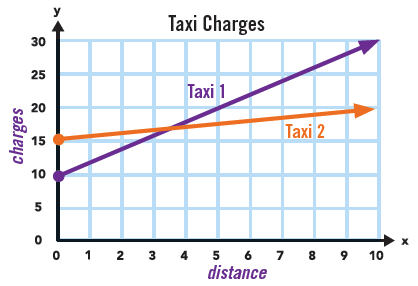
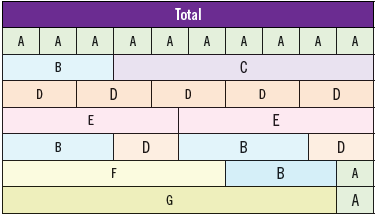
Through the lens of quantitative literacy, the focus is to interpret numerical information. However, this can be tricky, especially if an image doesn’t even contain a single number. This is where teachers prompt students to reason quantitatively. The sample prompts below work for both example images. The sentence stems serve as a catalyst for expressing reasoning.
- What do you observe in this image?
- I observe….
- What can be measured?
- – can be measured because….
- What are any known values (numbers)?
- – are known values for….
- What relationships do you notice?
- I notice a relationship between….
Quantitative literacy can also be taught through word problems. Here is an example of how to encourage making sense of the math with a word problem missing its last sentence (Kue, 2023, p.49).

To promote quantitative literacy, write a final sentence for this word problem. Take a moment to complete it. What did you write?
When I present this to teachers, most answers are one of the following:
- How many apples did Allen and Otis collect in total? (additive relationship)
- How many more apples did Otis collect than Allen? (subtractive relationship)
When asking students to form a final sentence, the purpose is to prompt quantitative reasoning, make sense of the math, and create relationships. If constructing an additive or subtractive relationship is too easy, try producing a final sentence that requires either a multiplicative or divisive relationship. Do not change or add new values (numbers). How often did you have to reread the word problem before you could write a last sentence establishing a multiplicative or divisive relationship?
This task addresses reading and writing, but its focus on creating relationships to reason quantitatively is what makes it quantitative literacy. Thus, it is not wrong to claim that reading is present in every content area. We just need to know that reading has a different purpose and format in every content area. Books, articles, blogs, etc., are great resources for promoting literacy. However, word problems, charts, spreadsheets, diagrams, receipts, and even price tags are also great resources for fostering quantitative literacy.
Diane Kue is the author of Solved: A Teacher’s Guide to Making Word Problems Comprehensible. You can learn more about this topic in her session Quantitative Literacy: The answer to “There is reading in every content” in the 2024 NCTM Virtual Conference in April and as a featured speaker at CAMT 2024 in Houston July 15-17.
Kue, D. (2023). Solved: A teacher’s guide to making word problems comprehensible. Seidlitz Education.
Mendoza, A, and Beene, T (2022). Teaching math to English Learners. Seidlitz Education
Peterson, A. (2020). Literacy is More than Just Reading and Writing. NCTE https://ncte.org/blog/2020/03/literacy-just-reading-writing/

 Seidlitz Education