by Sally Barnes
- “Stay in the target language 90% of the time.”
- “Take attendance every day.”
- “Refer back to your daily objective throughout the lesson.”
- “Conduct formative assessments throughout the day to check for student understanding.”
There are so many expectations that we have of ourselves and that others hold us to daily in our professional lives. How can we set ourselves up for success without becoming overwhelmed? The planning begins now, before the students walk into the classroom, in order to start the year strong. Here are some ideas to prepare for the upcoming school year!
Target Language Usage
ACTFL recommends that the teacher, students, and classroom environment are in the target language 90% of the time. How will you set yourself up for success with this lofty goal?
- Create a word wall with important procedural words and images (e.g., stand up, take out your notebook, turn in your paper, put away your phone). Reference these images and use gestures to support meaning until students acquire these phrases.
- Use websites like www.thenounproject.com and www.flaticon.com to find clear, simple images that can support your written and spoken instructions.
- Create an “English Zone” in your classroom that students can visit if they need support in English during a “Target Language Only” activity.
- Provide important questions in the target language from day 1 on a poster and reference frequently. Questions like “Can I have more time?” or “Can you restate the instructions?” can be practiced from day 1. Click here for posters!
Classroom Routines
Set high expectations early on and practice routines every day until they’re established. Simple strategies like Numbered Heads Together or having students collect handouts from a table by the door as they walk in will help with classroom management, timing, and accountability.
- How will students be grouped up in your class during collaborative and conversational activities? Using strategies like these listed below can help you figure out how to set up desks/tables and prepare students to work together from day 1:
- Shoulder partners
- Numbered Heads Together
- Travel buddies/away partners
- Will you have a specific place to collect work, turn in work, etc.? Make sure it’s clearly labeled and that students collect/turn in something to that spot every day until the routine is established.
- Consider having a “sentence stem board” or using a specific font style/color scheme for sentence stems in your slideshows. This will make it easier for students to find language support and communicate in complete sentences.
- When will you take attendance each day? Will you set a timer to remind yourself, or have students remind you after the warm-up?
- How will you get students the information they missed when they are absent? Will you have an “absentee work” folder in your room, a place online to find the information, or will it be the responsibility of their table group to share what was done that day?
Language Supports
How can you support your students as they navigate the target language at any proficiency level?
- Provide sentence stems in the target language from day one so students get used to the expectation of speaking in complete sentences. It’s important to display, model, and practice these sentence stems as often as possible in order for students to internalize the language.
- Create anchor charts with commonly used words/phrases for transition words, connecting words, comparisons, etc. Have them prominently posted for students to use and continue to add to them throughout the year. Here are some examples!
- Have students contribute to word walls with high-frequency and student-generated vocabulary by creating a small poster (notecard size or slightly larger) with the word in the target language and an image.
- Running out of wall space? Consider using a tri-fold poster board that can be placed in a prominent area during a lesson and removed when it is no longer needed or when classes switch.
- Ask students to create image-based personal dictionaries with words they find important to help them acquire meaningful vocabulary more quickly.
Formative Assessments
How can you check for understanding quickly and frequently?
- Prepare templates for simple formative assessments that can be used throughout the lesson and/or as an exit ticket. Having them ready means you can simply copy and paste the strategies themselves or cues to remind you to utilize the strategies into your slide decks as needed.
- Zero-to-five ranking slide to check for student understanding. Here are some more ideas!
- Find green and red Solo cups and have them ready for students to use to show whether they understand (green cup on top) or they need help (red cup on top). Use an image like this in your slide deck to remind you to ask students to show their green/red cups.
- Create a QSSSA template or slide to use as a ticket out or throughout the lesson for quick comprehension checks. Need a refresher on QSSSA? Check out this blog post for more information!
- Put white cardstock in a page protector and use them as “whiteboards” with dry erase markers for written checks for understanding.
- Working on cultural comparisons? Prepare a Venn diagram with a sentence stem box underneath to prompt students to write their ideas in a complete sentence.
Making Lesson Planning Easy
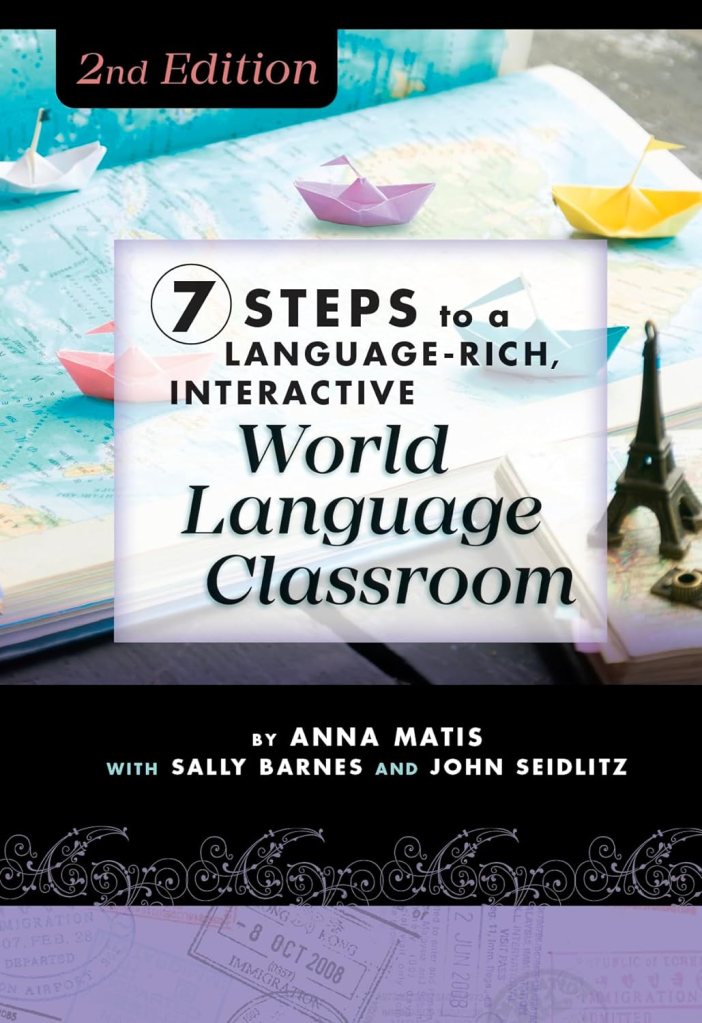
- What are some of your go-to strategies for your course? Ask/Ask/Switch? Four Corners? Conversational Bingo? Prepare a student worksheet template and a few slides that show pictures from past years, clear instructions in the target language with support from symbols or images, and timers to be ready to use when the moment arises! Consistency in instructions will help your students acquire the procedures, and preparing them now will save you time in the end! If you need some new ideas or want to read more about the strategies mentioned above, check out our new book, 7 Steps to a Language-Rich, Interactive World Language Classroom (2nd Edition)!
- Use a simplified format that ensures students get comprehensible input AND low-stress opportunities for output daily. Here’s an example of one informal format called R.I.O.T. that I utilized to help streamline the lesson planning process for my colleagues. You can find more ideas in part 2 of 7 Steps to a Language-Rich, Interactive World Language Classroom (2nd Edition).
- Warm Up: Conduct a 5-minute bell ringer to hook students to your lesson. Have them talk about an interesting photo, give written or verbal opinions on a quick video, or choose from a list of options and explain their rationale.
- Review: A short, five to seven-minute review of essential vocabulary, grammar, or concepts from past lessons. This is a great place for vocabulary games, manipulatives, anchor chart creation, informal discussions, brain dumps, etc.!
- Input: Students read or listen in the target language. Employ active reading/listening strategies (such as graphic organizers or annotation guides), so students don’t rely on “hunt and peck” strategies to find specific answers, but instead focus on true comprehension.
- Output: Students write or speak in the target language about what they’ve read or listened to. Use sentence stems, word banks, paragraph frames, and interactive activities to help students stay in the target language and collaborate with others.
- Ticket Out: Use a sentence stem that encapsulates the lesson for the day and have students complete it verbally or in writing to prove their learning. An example of this may be that students filled out a Venn diagram while actively reading about how two countries celebrate New Year’s, and at the end of the lesson, students use the stem “In ____, the people celebrate New Year’s by…. But in ____, the people celebrate New Year’s by…”
Strategic PD
- Professional learning can be like a Thanksgiving buffet; everything looks bright and shiny. However, if we try to take a list of 20 strategies back to our classroom to implement, we will likely become overwhelmed and feel like an overhaul is taking place. Be strategic with the strategies you want to try – focus on one or two new ideas from the session and create activities for your upcoming lessons with those strategies right away!
- Once you’ve determined the one to two strategies you’d like to utilize, put the names on a sticky note and stick it to your computer. This way, you’ll be reminded of them as you plan.
- Add a calendar invitation to your phone to remind you to implement the ideas you learned about in October, February, and April. The reminder during common “slump” stretches of time can be helpful to keep you on task!
What will you try and implement this year to keep your procedures and expectations top-notch?

 Seidlitz Education
One thought on “Start The Year Strong: Procedures and Expectations for World Language Classrooms”