To those who expect language acquisition to be entirely effortless, I say, “Good luck with that!” Effortless is not the same as joyful. I absolutely believe that language learning has to bring joy, but it may also require some effort on the part of the learner and some carefully crafted linguistic opportunities on the part of the teacher because the language acquisition process at the age of fourteen simply does not look the same as it does at the age of three.
Continue reading “Oral Corrective Feedback in Secondary Classrooms “Author: Seidlitz Education
Un instituto de verano: Una visión transformada
Algunas reflexiones sobre mi viaje a Puebla
¿Sabes esos momentos cuando la vida te ofrece experiencias que te impactan positivamente? ¿Aquellos eventos que te ayudan a comprender algo más allá de lo que creías y generan en tí una amplitud de miras? Eso es exactamente lo que me ocurrió a principios de junio, cuando tuve la oportunidad de enriquecer mis conocimientos sobre la docencia y el alfabetismo en español.
Continue reading “Un instituto de verano: Una visión transformada”Positioning Newcomers to be Successful in Math
How Can We Meet the Needs of Newcomers in Math?
by Jim Ewing

Who Are Newcomers, and What Is “Positioning“?
When we refer to newcomers, we are referring to students who have recently moved from another country. The focus of this article is to offer strategies for students who are learning a new language and culture.
Continue reading “Positioning Newcomers to be Successful in Math”Collaborating Across Departments to Serve Multilingual Learners

I dare to say that working alongside colleagues had and still has the greatest effect on my professional growth and, therefore, my multilingual learners’ success.
Continue reading “Collaborating Across Departments to Serve Multilingual Learners”Purposeful Phrases in the LOTE Classroom

Your words matter. The environment you create for your classroom matters. As a language teacher, you have the ability to create an environment that is engulfed in the language and culture from the very first moment of class to the last. Greeting your students every day in the language and teaching them how to respond to instructions in the target language are both important parts of this environment. As an immersive learner myself, it was the constant repetition (input) and the constant opportunity to give output that really helped my proficiency grow. It was repetition that became habitual—especially when the repeated phrases had a usefulness and meaning for me.
Continue reading “Purposeful Phrases in the LOTE Classroom”Sending Pictures Home: Engaging Families, Building Language, & Helping MLs Learn Content

The class is approaching a unit on life cycles. Ms. Prasad finds three images of living beings and their life cycles: a butterfly, a chicken, and a plant. She sends the three images home with each student for families to pick one and discuss. Families are asked to talk with their children about the image in the languages they are most comfortable with. They can share facts and vocabulary, and even make up stories about the picture.
When students come to class the following week, Ms. Prasad has all three pictures up on the screen, and students are asked to discuss them with their partners. They talk about the one their families picked and what they learned. Ms. Prasad walks around the room, listening and gathering information about students’ prior knowledge before she begins the unit.
Continue reading “Sending Pictures Home: Engaging Families, Building Language, & Helping MLs Learn Content”Literacy Squared® Conference: ¡Regresamos a Puebla!

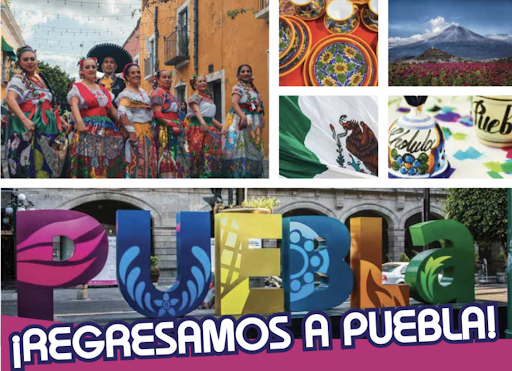
There is something magical about Puebla that keeps me coming back year after year. As I journey home from my fourth time there, I find myself reflecting on the invaluable experience that this city and its teachers bring to my life as an educator. For a little background, the Bueno Center at the University of Colorado in Boulder has hosted the Literacy Squared Conference for the past four times in this picturesque town about 200 miles from Mexico City. The conference is not just informational, but it inspires and teaches me to stay humble and focused on the greater cause: Supporting emergent bilingual students in the United States. I would like to briefly share the highlights that resurface time after time during this week-long event. Indulge me as I describe them the PUEBLA way.
Continue reading “Literacy Squared® Conference: ¡Regresamos a Puebla!”Meet the Author: 17 Stories
Steve Davidson’s 17 Stories: Students Finding Meaning Through Teaching and Service debuted from Seidlitz Education this summer. This inspirational book highlights the power students have to make a difference—for themselves and for their communities—when they’re encouraged to find meaning and passion in service.
17 Stories is a collection of testimonies from Davidson’s students about their personal experiences with service and the impact it has had on their lives. As the common denominator behind these students’ success, Davidson is clearly an educator to be reckoned with. As John Seidlitz says in the foreword to 17 Stories, “He has the biggest heart for his students I think I’ve ever seen, and he’s a very unorthodox, out-of-the-box thinker.”
But don’t take our word for it. We wanted you to have a chance to meet Steve Davidson firsthand. So here he is, introducing himself, the service program he created, and the book that we can’t wait to share with you later this summer.
Continue reading “Meet the Author: 17 Stories”Three Tips for Successful Summer Professional Development

We made it! Another school year has passed, testing season is finally over, and summer is upon us! This time of year often feels like the end of a chapter, with a whole mix of emotions: excitement about the summer (and maybe the next school year), relief from the exhaustion and stress, and perhaps even grief about moving on from these students and this teaching assignment into a whole new year. So when we start to see the conferences, workshops, and professional development offerings on the summer calendar, we naturally have a variety of reactions. For some of us, it’s a welcome opportunity to finally reflect on our practice outside of the stress and bustle of the school year. For others, it’s merely a requirement of our jobs, and we can imagine many other things we’d rather be doing, as what’s happening over the next two months (or even tomorrow) isn’t even on our radars.
Regardless of where our heads are at during professional development this summer, there is great potential to have a major impact on the next year (and we may even catch ourselves smiling, too!). Here are three tips for having an enjoyable, productive experience with PD this summer.
Continue reading “Three Tips for Successful Summer Professional Development”Language Exchange Club: Providing Emergent Bilingual Students with Opportunities to Participate in Extracurricular Activities
Research shows that when students involve themselves in extracurricular activities, their academic performance soars (Hollan, 1987). Fowler Middle School in Plano, Texas, exemplifies this. The school is known locally for its high STAAR scores and high-performing population. So much so that families move into its zoned neighborhoods just so their children can attend this remarkable school. Yet despite its success, when the school’s Special Populations committee convened and looked at the data, they discovered that not all subgroups of the student population were well represented in extracurricular activities—emergent bilinguals in particular—and that most of the clubs offered catered to already high-performing students. With these findings in mind, Fowler Middle School launched the Language Exchange Club.
Continue reading “Language Exchange Club: Providing Emergent Bilingual Students with Opportunities to Participate in Extracurricular Activities”