Culturally Responsive Pedagogy: Moving Below the Surface

by Dr. Michelle Yzquierdo 

The Cultural Proficiency Continuum 

As the demographics of the nation’s students become increasingly more diverse, we often find ourselves in front of beautiful children who do not look or sound like us. Many in education compensate for this difference by adopting the perspective of color-blindness, acting as though cultural differences are insignificant or do not matter. When looking at the cultural proficiency continuum (see Figure 1), which describes how an entity responds to diversity, one can see that being color-blind is certainly a better option than being culturally destructive or culturally incapacitated. And often, when educators embrace a color-blind philosophy, they do so with the best of intentions, misguided as they may sometimes be. Claims such as,  “I don’t see race,” or, “I treat all my kids the same,” are often the banner responses of a color-blind individual. Truthfully, I probably uttered similar phrases when I was a new teacher. But the reality is that culture does matter, and to be effective and engaging with an increasingly diverse student body, we educators must strive to move along the continuum into cultural competence and cultural proficiency.

Continue reading “Culturally Responsive Pedagogy: Moving Below the Surface”

Building Better Sentences: Rigorous Syntax for English Learners

by Natalia Heckman

“The assumption has been that if students read enough, they’ll simply pick up writing skills, through a kind of osmosis. But writing is the hardest thing we ask students to do, and the evidence is clear that very few students become good writers on their own” (Hochman, 2017).

Continue reading “Building Better Sentences: Rigorous Syntax for English Learners”

Transforming the Resources You Have into Accessible Formats for All Students

by Carmen Nguyen 

During this time of uncertainty, we are faced with many challenges that detrimentally affect and change how we are teaching. Whether we are teaching in a traditional face-to-face setting, completely virtually, or a hybrid of the two, it remains true that, as educators, we will continue to create, find, or purchase a variety of resources for the students we serve. Unfortunately, it is also true that the Lexile level of the grade level resources we have access to is not always appropriate for the various students in our classrooms. It is often difficult to find resources that are authentic and challenging and address grade-appropriate concepts, but are also at the students’ reading level. As educators we find ourselves adapting, changing, or supplementing the resources we have in order to teach our state-mandated curriculum.

Continue reading “Transforming the Resources You Have into Accessible Formats for All Students”

A Chat About English/Spanish Pedagogical Connections

by Dr. Patricia Morales

When I decided to pursue a degree in Linguistics several years ago, one of the hot topics of research was contrastive analysis, a linguistic instructional tool that compares and contrasts two language systems. Even though comparisons of language features and language interference became part of my literature review and lexicon, instructional strategies to support language and content development became my passion. 

Continue reading “A Chat About English/Spanish Pedagogical Connections”

What Is the Affective Filter, and Why Is it Important in the Classroom?

by Valentina Gonzalez

What Is the Affective Filter?

The term “affective filter” originates from Stephen Krashen, an expert in the field of linguistics, who described it as a number of affective variables that contribute to second language acquisition. Merriam-Webster’s Dictionary defines affective as “referring to, arising from, or influencing feelings or emotions.”

Continue reading “What Is the Affective Filter, and Why Is it Important in the Classroom?”

My Experience Learning Yoga: A Model for High-Quality Instruction

by Stephen Fleenor, PhD

When I was growing up, “doing school” always seemed to come naturally to me. I was well behaved, I made good grades, and I was often one of those students raising his hand to volunteer an answer to a question. My ability to thrive in a traditional classroom was clear on open house nights, when my teachers invariably greeted my mom with flowery descriptions of what a wonderful student I was and how… surprising…that was compared to their experiences with my older brothers. (The Fleenor family has some stories, trust me!)

So when I started my teaching career, I admittedly struggled to empathize deeply with my most struggling and/or misbehaving students. I cared about them, of course, and I wanted them to be successful, but I was missing that visceral, I’ve-been-in-your-shoes connection. As I grew as a teacher, I learned better tools to support them, but I didn’t fully understand what it was like to be at the back of the class. That is, until I started doing yoga. 

Continue reading “My Experience Learning Yoga: A Model for High-Quality Instruction”

What If the Answer Is More Reading?

by Tim McHugh, co-owner and VP of Sales/Marketing at Saddleback Educational Publishing.

Educators have done an amazing job adapting to what many have compared to a “100-year storm,” but hurdles such as access to technology have proved especially challenging. Even worse, these challenges hit many of our less fortunate students the hardest (and this will likely continue in the fall). How can we talk about equity for learners if we don’t provide an equal opportunity for all students?  

Continue reading “What If the Answer Is More Reading?”

Five Tips for a Strong Start — Then and Now

by Carol Salva

Cultivating a positive classroom climate, setting our norms, and getting off to the right start has an impact on how students interact throughout the year (Wong, 2005). The need for structure and a welcoming environment does not change as we shift to being physically distant or online. This is critically important to keep in mind as we enter a school year like no other. This year comes with unique challenges at every turn. While each school’s reality may be different, we have some common truths that remain important as we strive to cultivate an environment where all students have the best shot at learning.

Continue reading “Five Tips for a Strong Start — Then and Now”

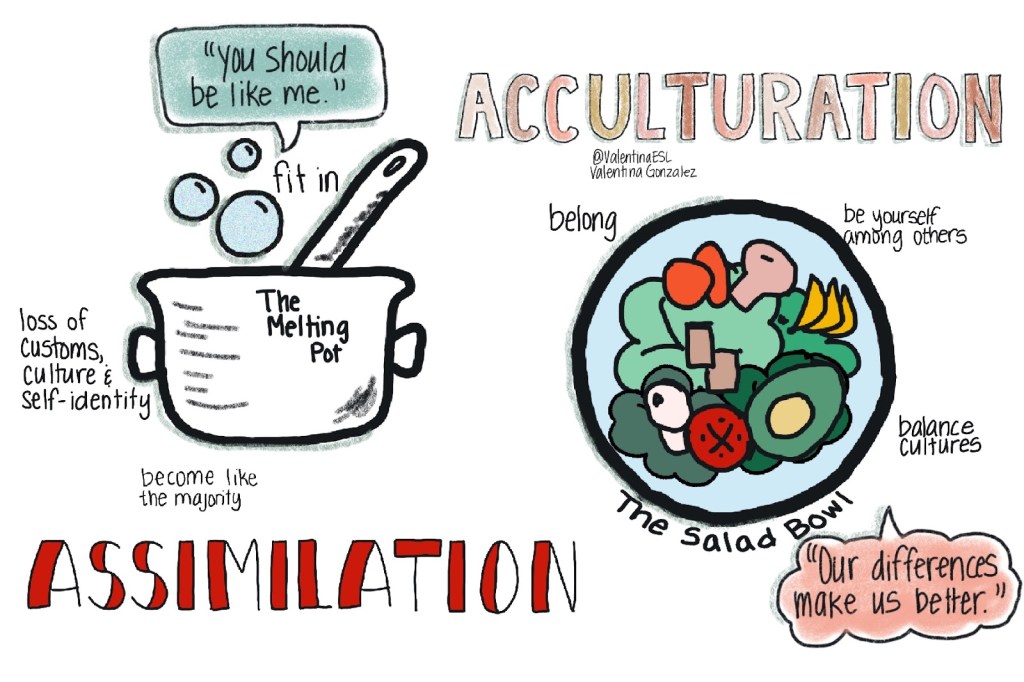
Belonging vs. Fitting In: How the Social Contract Helps Students

by Valentina Gonzalez

Along with basic needs such as food and shelter, Maslow’s Hierarchy of Needs shows that humans also have the need to belong and feel accepted. 

Think back on a time when you went somewhere new. Perhaps you traveled abroad or went to a professional networking event. Maybe you are thinking of your first day of class in college. 

You might remember looking around at all the people, yet feeling a sense of loneliness. I remember the first trip my husband and I took to Mexico. When we heard another couple speaking English with a southern accent, we were immediately drawn to them. When they said they were from Texas too, we felt an instant connection. Or just a few months ago, looking at a group of peers at a conference and seeing a name that was Serbian like my mother’s. The lady and I made eye contact, and I went over to her. The moment I pronounced her name correctly she lit up. She said no one ever reads her name correctly. Even though we knew nothing else about one another and had never met before, we instantly connected.

Connection: it’s something we all need. 

Continue reading “Belonging vs. Fitting In: How the Social Contract Helps Students”