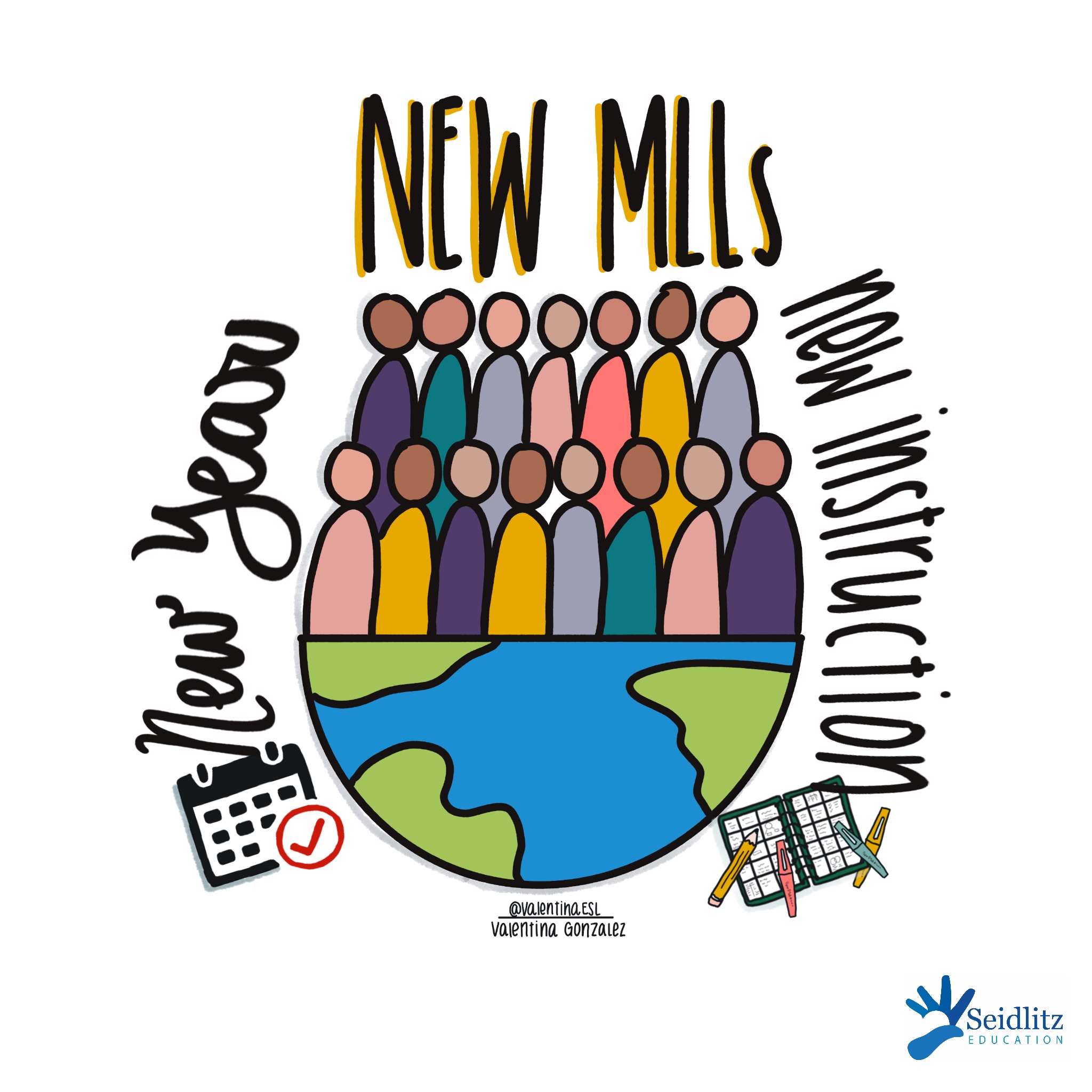
Before becoming an ESL teacher, I was a general education classroom teacher for several years. I taught language arts in elementary school and loved every single year and every set of students. You see, I didn’t set out to become an ESL teacher. But it happened, and I’m grateful that my journey led me here. It was a beautiful, surprising next step in my career as an educator.
Looking back on those first years as an ESL teacher, there are many things I wish I had known. There are many things I wish I could go back and whisper into the ear of the younger Mrs. Gonzalez. Here are a few:
We started the Seidlitz blog in January of 2019, three years ago now, and we couldn’t have predicted what a blessing it would become just over a year after we published our first post. Throughout 2020 and much of 2021, our blog became a powerful way to stay connected and start conversations with teachers across Texas, the United States, and beyond when we couldn’t come together in person to share strategies and ideas for supporting multilingual learners.
As we looked back on 2021, we wanted to see what blog content was resonating with all of you the most, so we looked at all our published posts, from launch day to now, to see which ones had had the most views throughout the course of the year. We loved the variety we saw in our ten most-read, from making math accessible to MLs to scaffolding reading and writing to lowering the affective filter.
Without further ado, here are the most-read Seidlitz Blog posts in 2021.
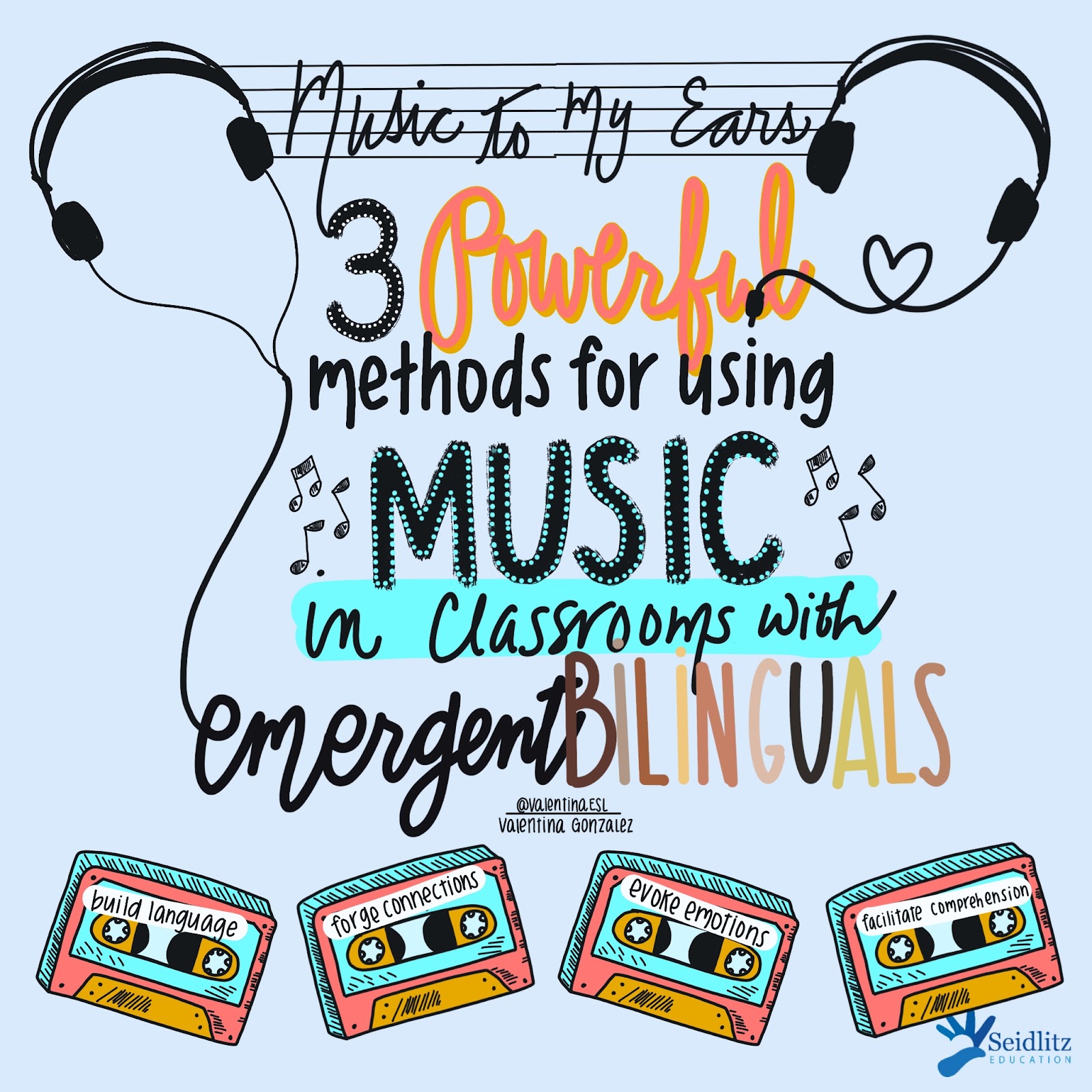
On an average Uber drive in the fall of 2021, I sat in the backseat listening to the music from the radio, trying to figure out the language. It somehow sounded familiar and also brought me back to my childhood memories. As the car pulled up to my destination, I thanked the driver and asked him about the music. He proudly told me it was Greek, and it was the sixth language he was learning through music. At that moment, I began to kick myself for not inquiring earlier. Now I wanted to know more. I had so many questions for the seemingly ordinary Uber driver who was actually extraordinary.
Earlier this year, I attended a session with Dr. Mónica Lara and John Seidlitz titled “The Dictado Method for ESL and Content Areas.” I was anxious to attend for two reasons. First, I wanted to feel validated, since Dictado was a staple activity in my secondary newcomer ESOL class. Secondly, as a big fan of Dictado, I was looking to deepen my understanding of the research and rationale behind the strategy. Everything I had known before the conference was purely intuitive, anecdotal, and empirical—and by no means would I ever consider any of it reliable. So, I jumped at the opportunity to hear about Dictado from the experts and the leaders in the ESL field.
For many years I taught on a campus with an ESL program. We served students from around the globe, and our program was well known for the success we had with multilingual children. Families literally sought out our school before signing a lease or purchasing a home, because they wanted to be sure their kids would be zoned to our campus.
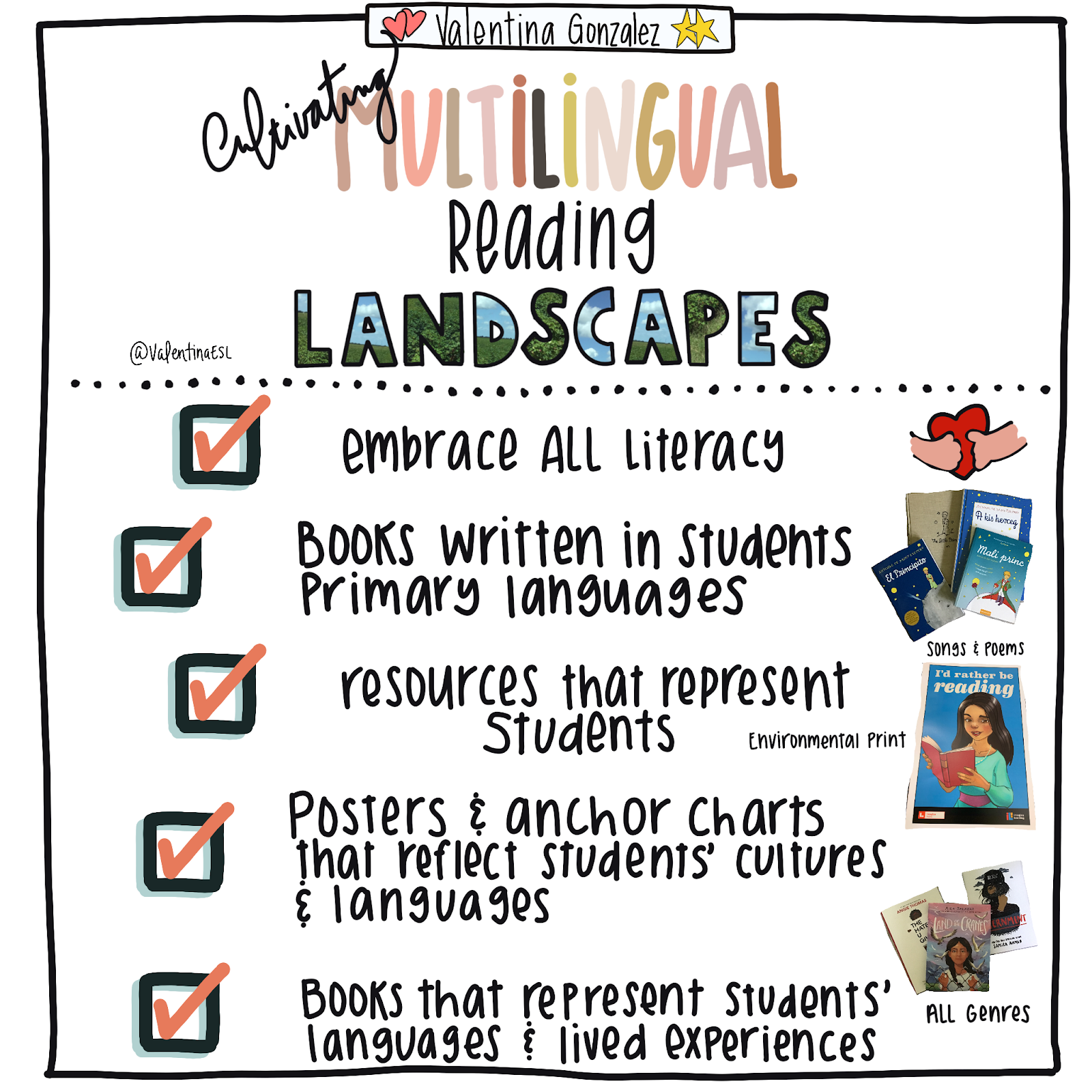
On our campus, we worked hard to be student-centered. Even though the majority of the teachers were monolingual, we nurtured a mindset that embraced students’ assets—all of them, not just their English assets.
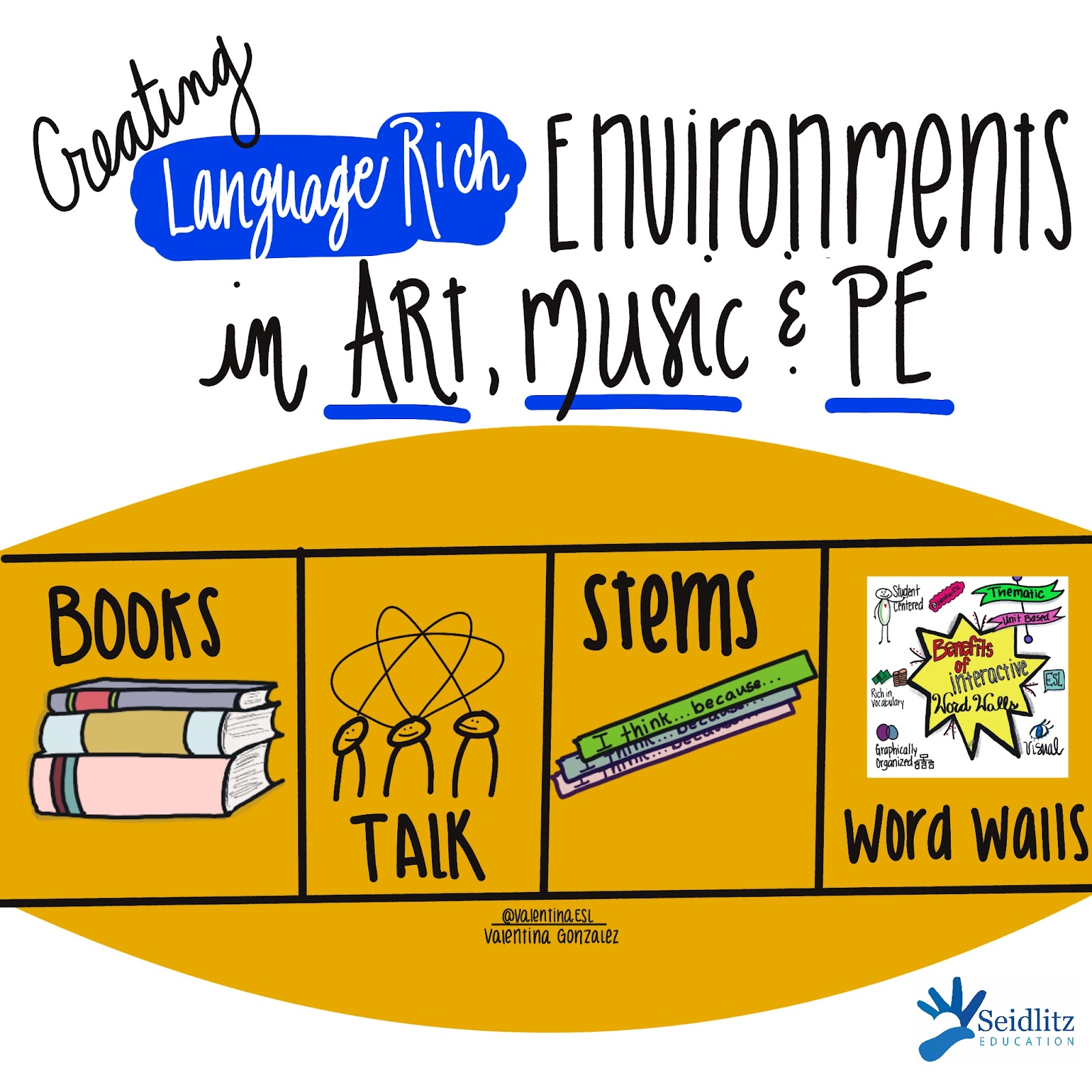
Many children count the minutes until their art, music, or physical education (PE) class period begins. This could be their time to shine, where they find inspiration or feel the safest. On the other hand, some students dread going to these same classes. They might feel insecure about their skills, shrink in the environment because they don’t understand, or feel as if they aren’t seen or valued.
Dr. Brené Brown says, “Those who have a strong sense of love and belonging have the courage to be imperfect.” Students need to know that it’s okay to make mistakes. Those mistakes are part of the process, both in language and in learning art, music, and PE. In fact, creating environments that immerse students in engaging conversations can promote a sense of belonging in art, music, and PE classrooms while building language and skills to succeed.
Two ingredients are essential for acquiring language: comprehensible input (Krashen, 2017) and multiple opportunities for low-stress output (Loewen & Sato, 2018). This means that students must understand what they hear or read and have opportunities to express themselves verbally or in writing in safe, risk-free environments. Art, music, and PE can be great places to provide these opportunities for students. The four ideas below bring comprehensible input and low-stress output into art, music, or PE. They will enhance language acquisition for English learners, but they are effective for all students too.
I stumbled into my first English-Russian interpreting job in 1997. In my last year at the Linguistic University of Nizhny Novgorod, someone asked if I wanted to interpret for a British specialist for a day.
The British specialist, Nancy, was a vet from the UK, and we spent the entire day vaccinating cows at the nearby cattle farm. I was translating while Russian specialists were following Nancy’s (my — oh horror!) directions.
If we’ve learned anything this past year and a half, it’s to be prepared for anything. Being flexible and adaptable in our approach to instruction has taken on new meaning. The circumstances we’ve lived through will leave us all changed.
Our recent experiences have taught us about fragility and strength in education. Many schools rapidly closed their doors and moved into remote instruction when the pandemic hit. Educators were stunned. No one could have predicted that the situation would last as long as it did (or has). At the same time, as a nation of educators, we learned how strong we are together. Teachers readily shared resources and knowledge. They helped one another make the pivot from traditional classrooms to virtual learning and then to hybrid and back again.
Could this happen again? It could, and if it does, we’ll be better prepared next time. Here are some things to keep at the forefront as the new school year begins.



 Seidlitz Education