What do students do right away when they walk into class? Are there a few minutes when they sit idly while you take attendance or get papers and materials organized from the last class? Maybe the lesson ended early, and you find your class with a glorious 5-10 minutes of “free time.” Maybe you read your audience half-way through a lesson and realize you’ve lost them due to too much sitting. How can we utilize these in-between moments to provide students with low-stress opportunities for meaningful language practice?
One aspect of instructional coaching I thoroughly enjoy is learning from creative educators. There have been countless occasions in which I entered a classroom to observe a teacher following a planning conversation, only to see a brilliant implementation of strategies that reflect the teacher’s unique personality. The teacher has come up with something so much more than what we had even brainstormed together! The images that follow represent examples of easy-to-implement language rich strategies for those in-between moments. Thank you to the talented and dedicated teachers and students they represent. I am always, always learning from you!
7 Ways for 7 Steps to a Language-Rich Classroom Real-Quick:
- Get students up and moving with question-and-answer stem cards. Keep baggies or envelope cards on desks or posted around the room. Give students 3 minutes to get up, find a card, and practice the question and answers together. This is excellent for movement anytime during a lesson when energy needs a boost, or you just have a few minutes to spare. This strategy also works if a few students are still working at their desks to finish a task while others are ready to review quietly. Model for students how to whisper their conversations so as not to disturb others. Alternately, organizing students into parallel lines using stem cards results in 100% participation and a variety of language pairs.

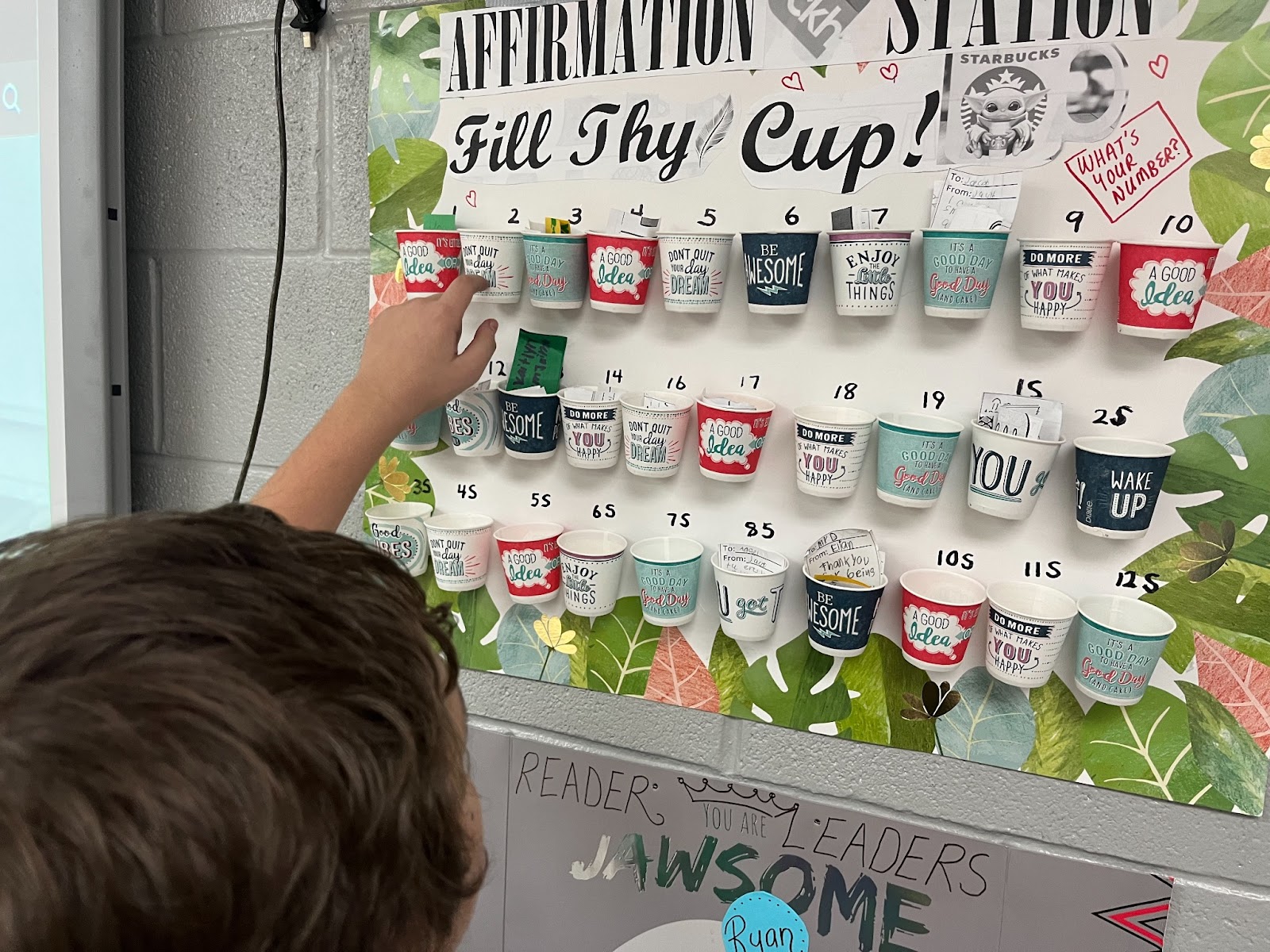
2. Coffee Cup Conversations: Attach small disposable cups to a bulletin board or trifold display poster. Have students travel to the cups and have a quick conversation that encourages the verbalization of key vocabulary words. Consider the language level of your students. Newcomers benefit from reading a short question and answer with visuals attached. Intermediate students can choose from a few options, and more advanced students can answer open-ended questions. Regardless of the language level, all students are developing understanding and fluency by articulating academic language in a low-stress way. (Shout out to Rhode Island teachers for these. You know who you are!)

3. Have students pull out their interactive journals and grab a sentence stem card each. These stems can come from phrases students will see on upcoming assessments, straight from a mentor text, or from a word problem. With a partner, they generate a sentence that relates to the unit of study using the stem or key word. Each student jots down the sentence and then trades journals to leave a follow-up comment or affirmation.

4. Speaking of positive affirmations written by students, end-of-class routines can include an affirmation station (see image with labeled cups) in which students write encouraging notes to classmates at the end of the period or school day. Students are encouraged to add a note to one that might be missing.
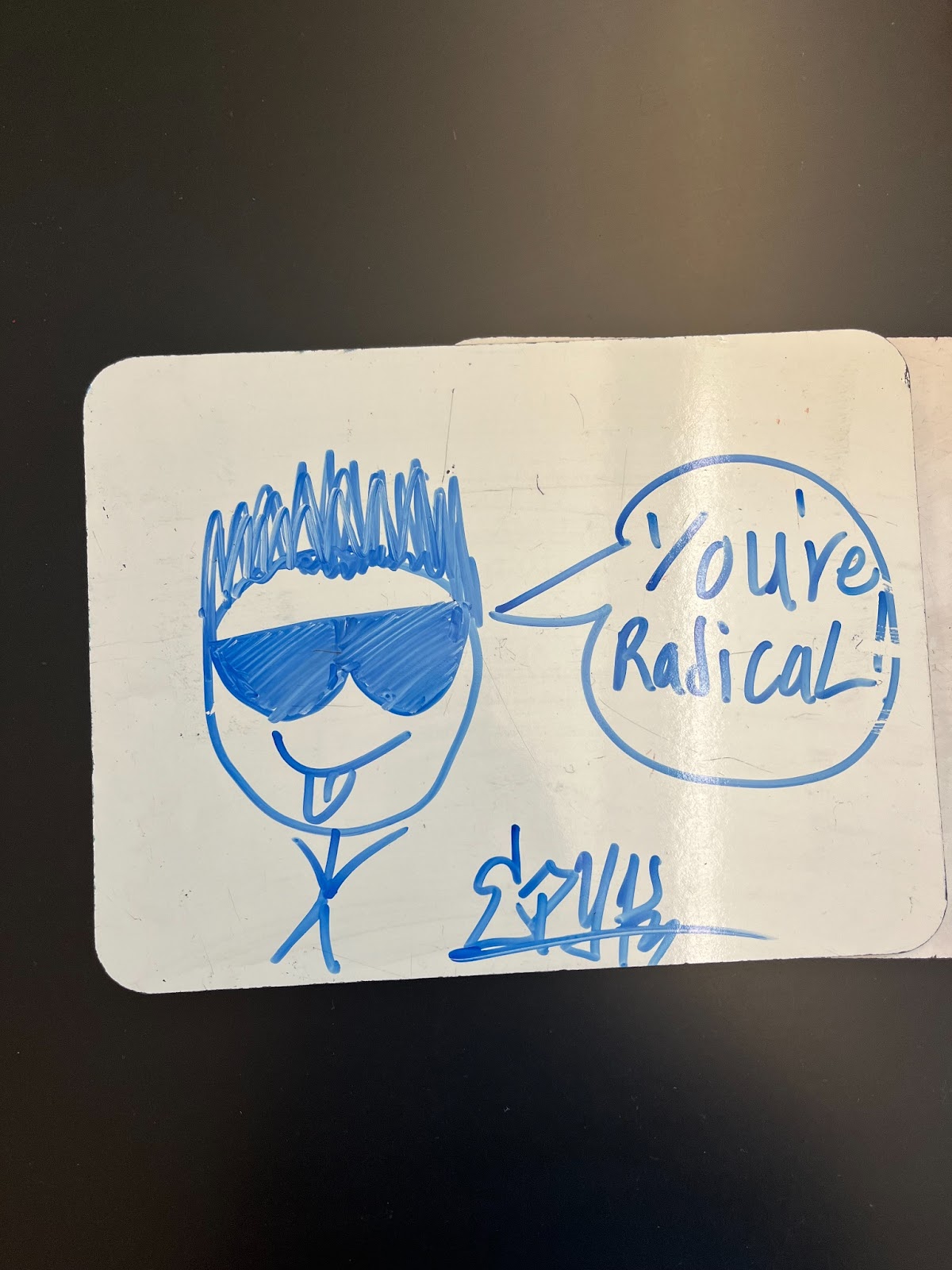
Secondary students can leave words of encouragement and simple, smile-inducing drawings for the next class period coming in behind them. Who doesn’t love a bit of art with a dry-erase marker and a wipe board?
5. Puzzles! Puzzles represent real-world problem-solving skills while also being a healthy focus for social relationships. Working toward a common goal on a 100-piece puzzle creates a reason to work together. If you have space, consider a more complex puzzle and leave it in a place where students can work on it as they have a few minutes here and there or just need a brain break.

6. Another fun, language-rich activity that involves dry-erase markers is to create a visual representation of the lesson on desks. Provide a word bank or a unique keyword at the beginning of the lesson for each student to listen for during the lesson. Start by having students write down the word and predict its meaning, or look up its meaning. They listen to, hear, and understand their words, which should confirm or challenge their definition. Anytime there are a few minutes (or at the end of class), have them revisit the word and add to their definition or drawing, or write a sentence that contains the word.

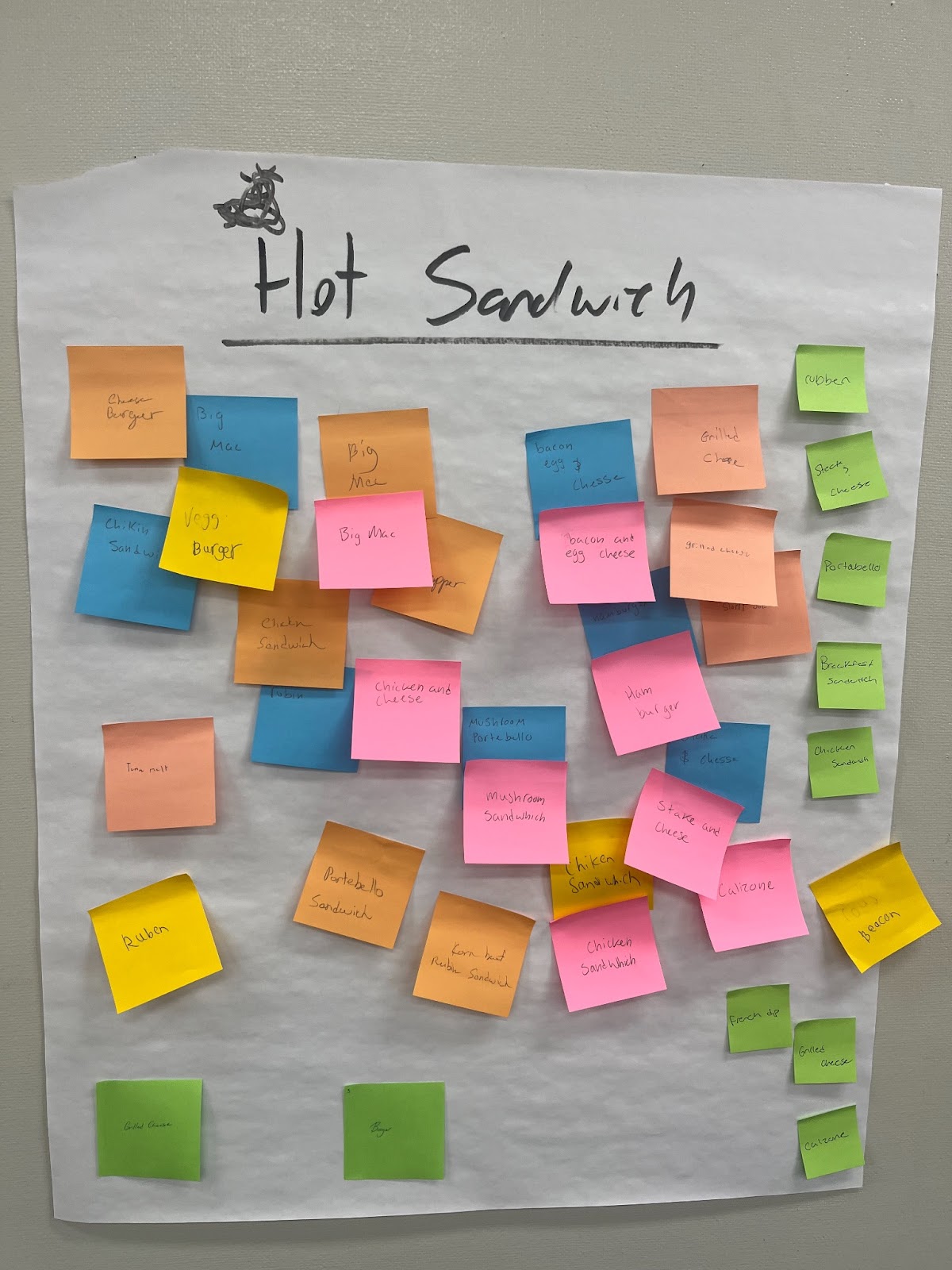
7. Get up and Post-It! Students grab a sticky note, jot down an item in a category (a topic from your objective), and get up and post it on an anchor chart. Throughout the lesson or in the following days, students rearrange or create sub-categories for the notes. The example in the photograph was taken from a culinary arts class and shows different types of hot sandwiches. Students could then further categorize them by ingredients, preparation methods, types of bread, countries of origin, etc.
Try one of these ideas and adapt them for your students! You’ll soon be imagining even more clever ways to engage and entice your students’ desires for a language-rich environment.

 Seidlitz Education