
By Lora Beth Escalante
My personal connection to music and language learning goes back to high school. My Spanish teacher would play Shakira and encourage us to listen and move. I had no idea what she was singing, but her ballads were beautiful and evoked emotion even without comprehension. Possibly more powerful was the motivation it gave me to learn a second language. I wanted to understand. This was back in the day when CDs came with little booklets to follow along with the lyrics. I can sing every song from my very first CD, the Forrest Gump soundtrack.
I started purchasing CDs and listening in the car and in my bedroom. My parents endured many drives around town as I attempted to croon to Ana Gabriel and Juan Gabriel.
What songs do you play the most? Do you have a favorite genre of music for exercising, gardening, cleaning, or taking a relaxing bath? Do you sing along, dance, nod your head gently, or tap your foot to the beat? As a world language, bilingual education or content teacher, have you considered integrating more music into your life, your classroom, and your campus? What musical benefits can you envision your students enjoying?
One recent study of second language acquisition (Babayev, 2026) found that “learners exposed to musical input demonstrated improved recall of words and phrases compared to those using traditional study methods, an effect largely attributed to repetition and melodic structuring, which reinforce memory pathways.”
Try these 7 ideas for implementing music effectively into everyday language learning in the classroom!
Idea 1: Select a song that relates directly to the content and language objectives. Ideally, the song will include key academic vocabulary related to the topic. Provide the complete lyrics so the students can follow along as they listen.
Example: This song teaches Spanish by singing about the joy that libraries provide.
📚Canción Día Internacional de las Bibliotecas Escolares
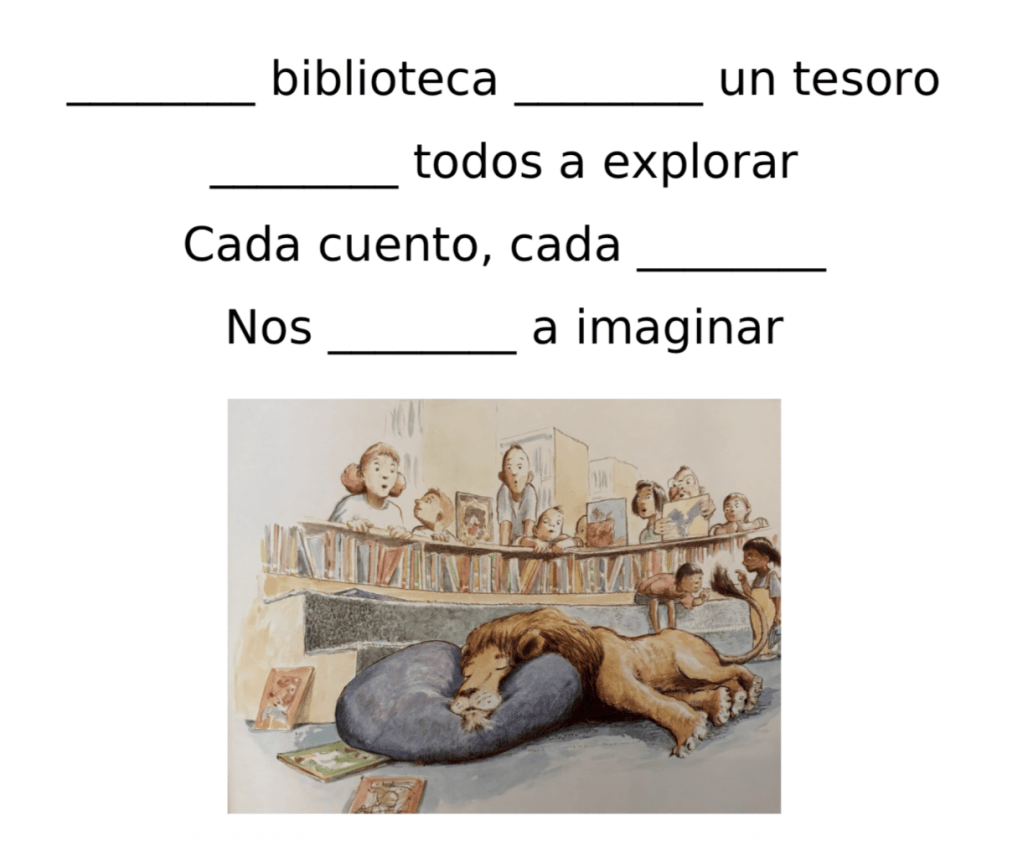
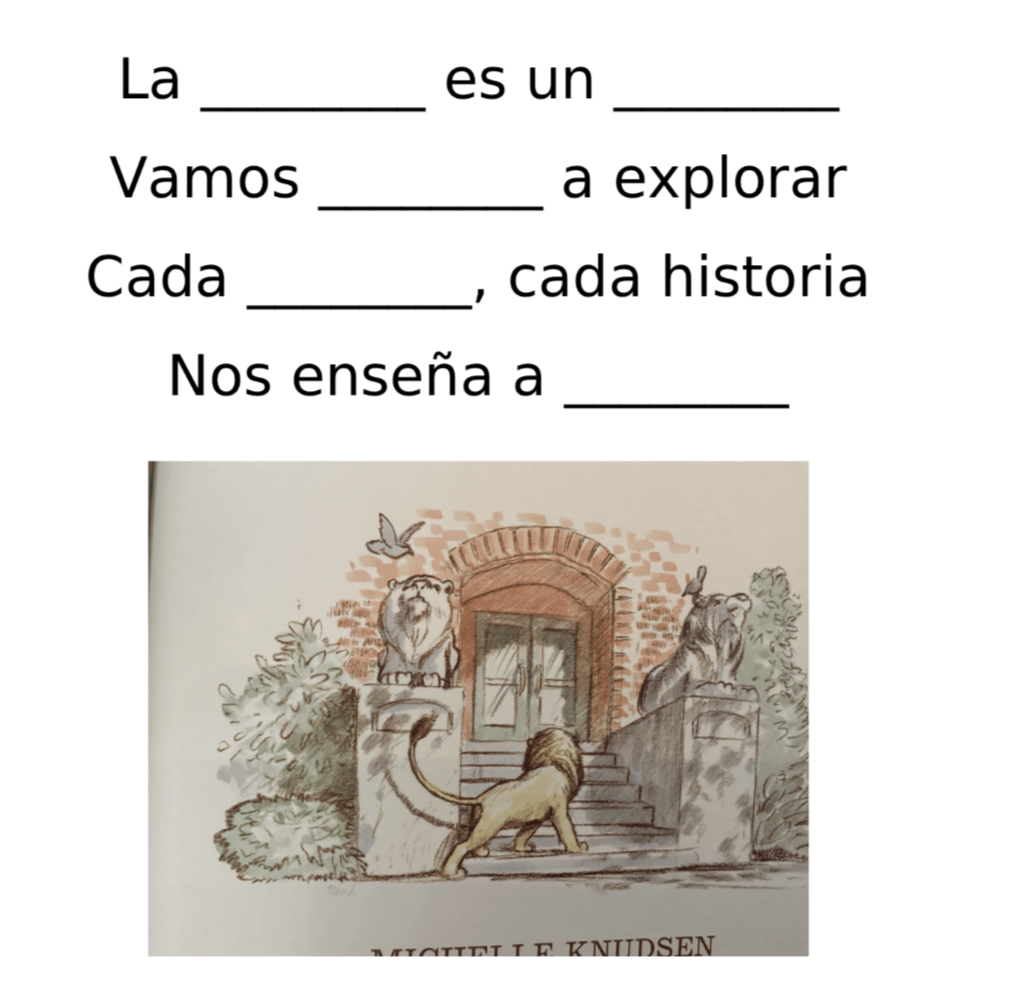
Idea 2: Focus on the repeated sections of a song (usually the chorus). Provide several versions with missing words so that partners have a reason to read and sing while they work together. Chunk the song into sections as students learn so as not to overwhelm language learners. The example below is the chorus from the library song. This strategy is referred to as “Information Gap” in the new ELPS Flip Book by Hand and Seidlitz (2026).
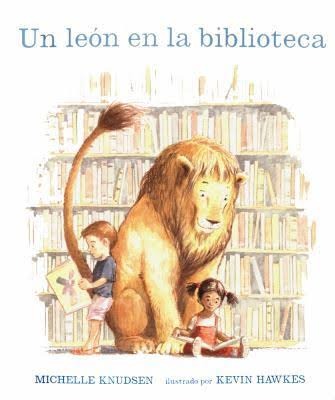
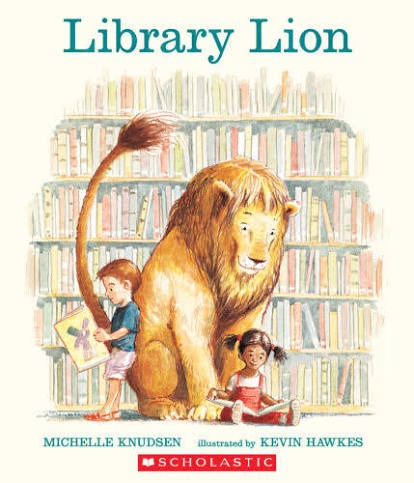
Idea 3: Read a related text or portion of a text that provides additional content learning and encourages reading enjoyment and development.
Idea 4: Have students choose a genre to sing lyrics provided to them. You can offer them a choice of creating a dance or choreographing a section of the song (I usually start with the chorus) or using American Sign Language to incorporate movement to facilitate the internalization of the vocabulary and phrasing. Consider utilizing an AI tool to create a song from a key bank of vocabulary or concepts. Here is an example based on a short text related to Scoville Heat Units (Jabbour, 2024).
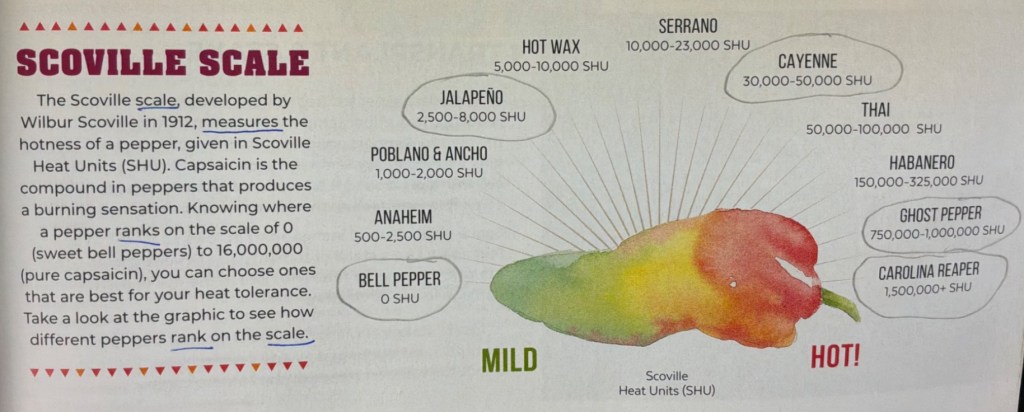
I recently asked students to sing in pairs and each pair decided how to sing this song. Some chose a country beat, a rapping style and even opera! This is a great reminder that choice breeds motivation.
For students who are reluctant to perform in front of the class, a few external rewards might incentivize them (a lollipop, bonus points on an assignment, etc.) or they might choose to record themselves privately and project the recording to the class instead of a live performance.
Idea 5: Guide students to create their own song or verse to a familiar tune. I refer to this activity as Song Writers in my book, Motivating ELLs (2018).
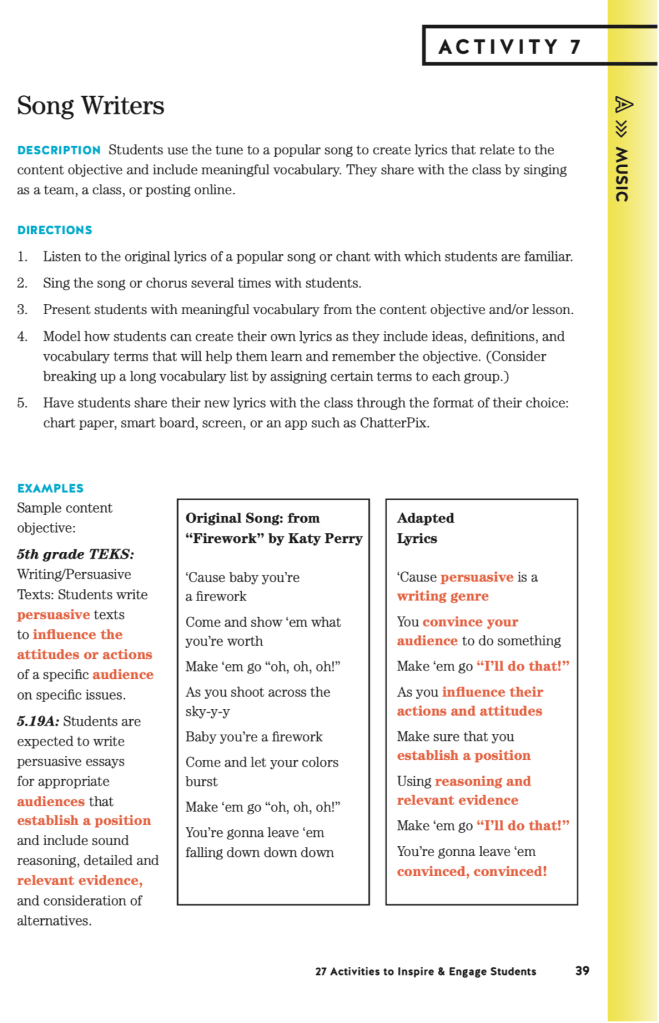
Idea 6: Consistency is key! Choose a time during each class to play the song. This can be a warm-up, a brain break, or an end-of-class routine. Meaningful repetition will allow all students to continue acquiring more and more of the song each time they hear and sing it.
Focusing on World Language classrooms, Michael at World Language Resources reminds us that “when we listen to music that we like, our brains hold onto those words by creating enduring connections. Music acts like a mnemonic device, and the constant repetition involved in replaying songs that we love over and over helps the song lyrics stick.”
When songs “stick,” we often hear students humming or singing the songs well after the music in our classroom has ended. It just happens to us as humans!
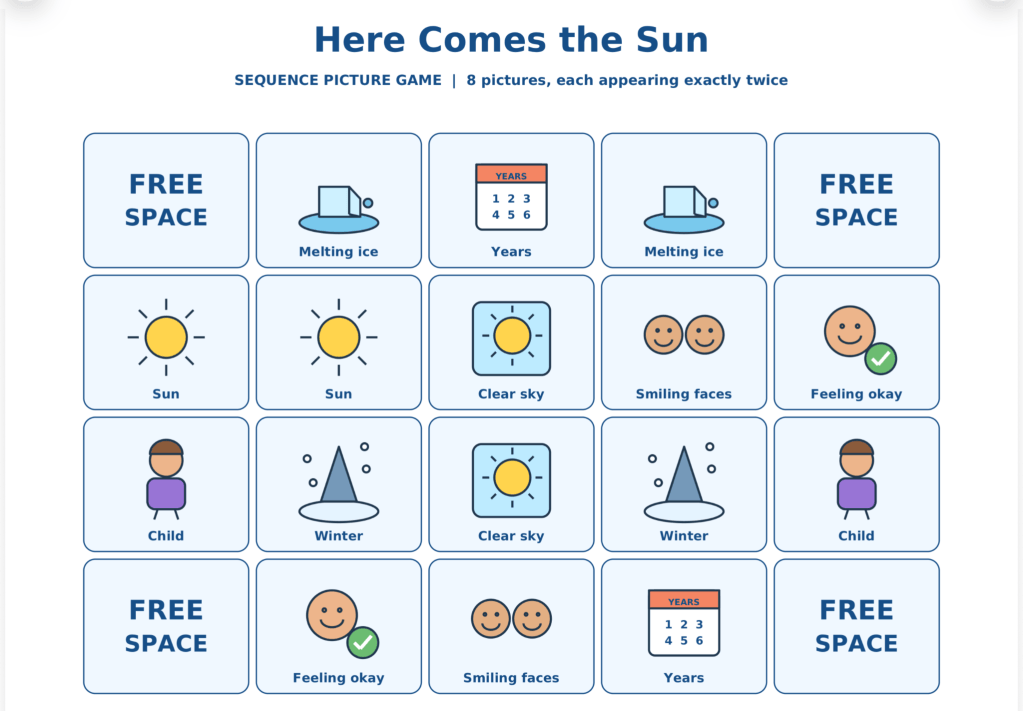
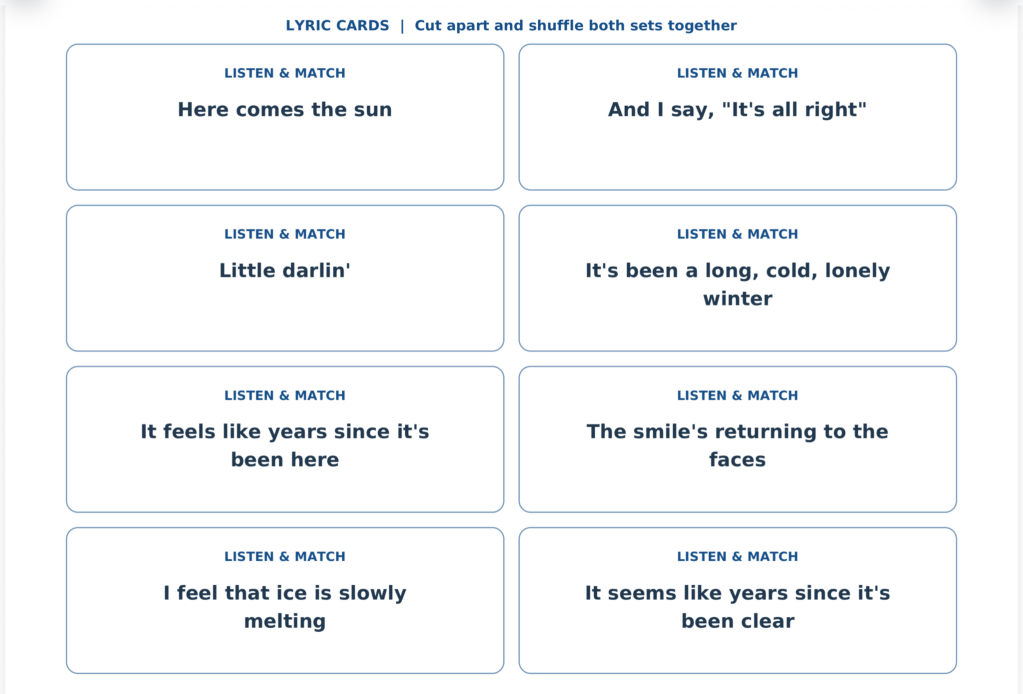
Idea 7: Make a game out of song lyrics. I utilized AI to create a Bingo-style board game where students match lyrics to images using the song “Here Comes the Sun” by The Beatles.
- Players take turns drawing lyric cards from a stack and placing a token over the corresponding image on the game board.
- A player wins by marking 4 in a row horizontally or vertically with tokens. Multiple images that relate to the same phrases allowing students options of where they can achieve four in a row.
- Students can be strategic by blocking each other. For example, if the card you draw corresponds to the game square “clear sky” and you see that your partner could win on their next turn by covering up the “clear sky” square next to “smiling faces”, you could block them by placing a token in that square.
GAME BOARD:
CARDS that correspond to GAME BOARD:
Enjoy creating opportunities for language learning as you fill your classroom with joyful music!
~
Sources:
Babayev, J. (2026). From lyrics to fluency: The power of songs in language study. EuroGlobal Journal of Linguistics and Language Education, 3(2), 42–48. https://doi.org/10.69760/egjlle.2602006
Michael. (2025, November 14). The importance of music in the world language classroom. World Language Resources. https://www.worldlanguageresources.com/blog/french-spanish-italian-music-in-the-classroom
Escalante, L. B. (2018). Motivating ELLs: 27 activities to inspire & engage students. Seidlitz Education.
Hand, A., & Seidlitz, J. (2025). ELPS flip book: A user-friendly guide for academic language instruction (2nd ed.). Seidlitz Education.
Jabbour, N. (2024, August 1). 6 types of peppers to grow. Garden Gate. https://www.gardengatemagazine.com/articles/vegetables/edible-plant-guide/types-of-peppers/


